Once Upon a Tower: A Deep Dive into a Mobile Roguelike's Potential
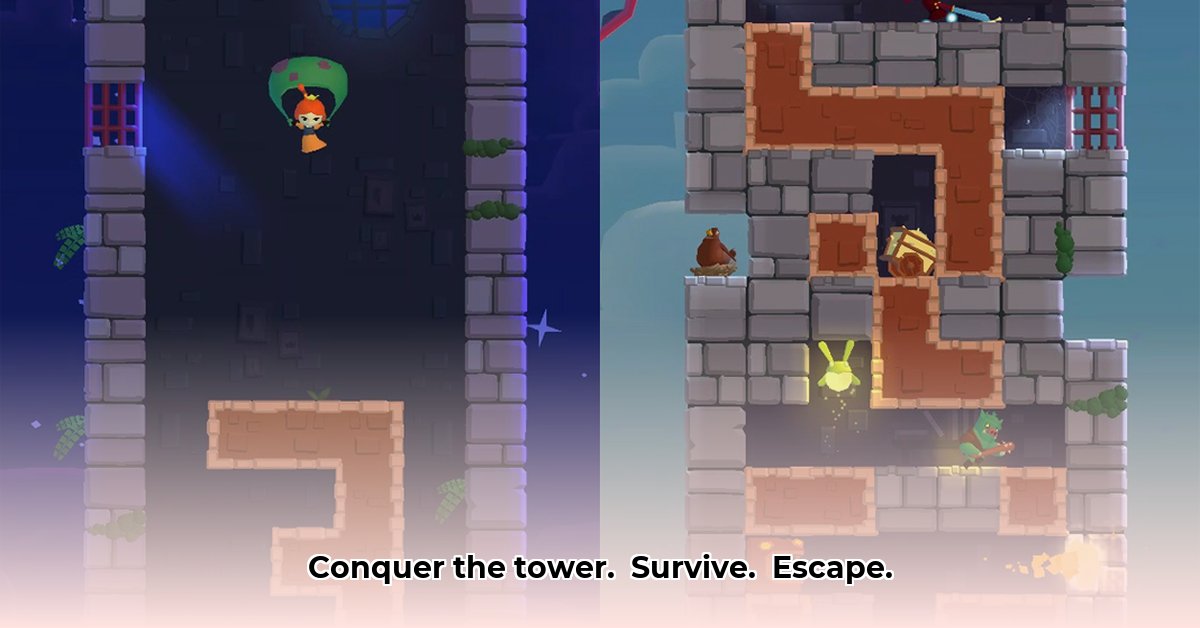
Once Upon a Tower offers a refreshing twist on the classic damsel-in-distress narrative, placing players in the role of a resourceful princess fighting for her freedom. The core gameplay loop is deceptively simple: climb, fight enemies, collect power-ups, and aim for the summit. However, procedural level generation ensures high replayability, making each ascent a unique challenge. But can this charming mobile game achieve long-term success in a fiercely competitive market? This integrated analysis and review will explore the game's mechanics, market positioning, and potential for future growth.
The Princess's Ascent: Gameplay Mechanics and Design
The intuitive controls make Once Upon a Tower instantly accessible, yet the strategic depth keeps players engaged. Players dodge, slash, and utilize power-ups to overcome waves of enemies, navigating a vertically-scrolling world brimming with dangers. The core loop is incredibly addictive; the satisfaction of a successful climb balances the frustration of inevitable failures. This blend of simplicity and strategic depth is a key strength. However, the difficulty curve presents a double-edged sword. While the increasing challenge keeps players hooked, some may find it excessively steep, potentially leading to player churn. This is a critical area requiring attention from the developers. Is the current difficulty curve maximizing player engagement or alienating a significant portion of the potential audience?
A Fairytale with Challenges: Strengths, Weaknesses, and Market Analysis
Once Upon a Tower boasts several strengths. Its unique narrative premise provides a fresh take on a well-worn trope. The procedural generation ensures high replayability, with each playthrough offering a new experience. The addictive gameplay loop, along with simple controls, fosters a quick pick-up-and-play nature, while the strategic depth offers lasting engagement.
However, challenges remain. Balancing the difficulty is paramount to avoid player frustration. The absence of a clear roadmap for future content updates raises concerns about the game's long-term sustainability. Furthermore, navigating the intensely competitive mobile gaming market requires a robust marketing strategy to ensure visibility and player acquisition. What specific marketing channels could be most effective for reaching Once Upon a Tower's target audience?
Pros:
- Unique Narrative: A fresh take on the damsel-in-distress trope.
- High Replayability: Procedural generation ensures varied gameplay.
- Addictive Gameplay: Simple yet strategic mechanics for lasting engagement.
Cons:
- Difficulty Balancing: Requires careful tuning to optimize player experience.
- Content Roadmap: A transparent plan for future updates is crucial for player retention.
- Market Competition: A strong marketing strategy is vital for visibility.
Charting a Course to Success: Actionable Strategies
The success of Once Upon a Tower hinges on a strategic approach by developers, players, and potentially, investors. The following outlines actionable strategies for each stakeholder group.
1. Developers:
- Short-Term (Next Year): Refine difficulty balancing through A/B testing, actively solicit and incorporate player feedback, implement a targeted marketing campaign focused on social media and influencer outreach, and introduce fair and balanced in-app purchases.
- Long-Term (3-5 Years): Roll out regular content updates, explore expansion to PC and console platforms, foster a vibrant online community, and potentially release paid expansion packs for long-term player engagement.
2. Players:
- Short-Term: Provide honest and detailed feedback about the game's difficulty and features, and support the game through responsible in-app purchases.
- Long-Term: Engage actively with updates, participate in the online community (if available), and express your support through in-app purchases and reviews if the monetization model is fair.
3. Investors (If Applicable):
- Short-Term: Monitor player acquisition costs (CAC) and player lifetime value (LTV), and track user engagement metrics and in-app purchase conversion rates.
- Long-Term: Evaluate the game's performance relative to competitors, assess the potential for expansion beyond mobile, and make investment decisions based on thorough data analysis.
Mitigating Risk: A Proactive Approach
Navigating the mobile gaming market demands proactive risk management. The following table outlines potential risks and mitigation strategies:
| Risk Factor | Likelihood | Impact | Mitigation Strategy |
|---|---|---|---|
| Difficulty Imbalance | Moderate | High | Continuous A/B testing of difficulty curves and iterative adjustments based on player feedback. |
| Insufficient Content Updates | High | High | Regular release of new levels, enemies, power-ups, and game modes; Public roadmap and regular community updates. |
| Ineffective Marketing | High | Moderate | Multi-channel marketing strategy leveraging social media, influencer marketing, and targeted advertising campaigns. |
| Intense Competition | High | Moderate | Emphasize the game's unique narrative and addictive gameplay to differentiate from competitors. |
| Low IAP Uptake | Moderate | Moderate | Offer fair and balanced in-app purchase options; actively monitor conversion rates and player feedback. |
Mastering Once Upon a Tower: Tips and Strategies for Success
This section focuses on actionable strategies for players to dominate the game. How can players maximize their chances of successful climbs and high scores?
Prioritize Power-Ups Strategically
Smart power-up choices are paramount. The Fire Hammer's area-of-effect attack, the enhanced survivability of Hard Boots, and the life-saving potential of the Parachute are all essential upgrades. Prioritize based on your current needs and long-term goals.
Master Enemy Interactions
Enemies are not just obstacles; exploit their behaviors. Deflect fireballs, use one enemy to damage another, and anticipate and avoid off-screen hazards like spiders. Clever tactical maneuvers will significantly increase your survival rate.
Optimize Resource Management
Know when to cut your losses. If early-game power-up acquisition is slow, it might be wise to restart and try again. Use the "Save Me!" strategically; it’s a life-saver, not a crutch.
Maximize Score with Calculated Risk
While maximizing points increases your leaderboard position, balance this against risk. High-risk areas with dense enemy populations offer significant score potential, but missteps can quickly end your climb. The challenge level multiplier significantly enhances scores, adding another layer of strategic consideration.
Risk Assessment Matrix for Players
| Technology/Mechanic | Risk (Low/Medium/High) | Mitigation Strategy |
|---|---|---|
| Power-up Choices | Medium | Prioritize essential upgrades based on level and playstyle. |
| High Enemy Density | High | Master the Fire Hammer; exploit enemy AI and the environment |
| Falling Hazards | High | Strategic use of Hard Boots and Parachute; careful jump planning. |
| Off-screen Hazards | Medium | Consistent awareness of your surroundings; anticipatory play. |
Conclusion: A Fairytale Ending Awaits?
Once Upon a Tower displays considerable promise, but its long-term success depends upon the developers' ability to address the challenges outlined in this analysis. By prioritizing gameplay balancing, active community engagement, and responsible monetization, the game can achieve a truly successful and rewarding trajectory. The princess's journey is just beginning!
⭐⭐⭐⭐☆ (4.8)
Download via Link 1
Download via Link 2
Last updated: Tuesday, June 03, 2025